

Est. Reading Time: 3-4 minutes
Written by Jake Miller, Licensed Sr Home Inspector
As we wrap up our calendar year, I thought it would be fitting to take a look back at the year and talk about some of the most common callouts (or defects) that our Inspection Team found throughout the past year.
Missing GFCI Outlets/Protection
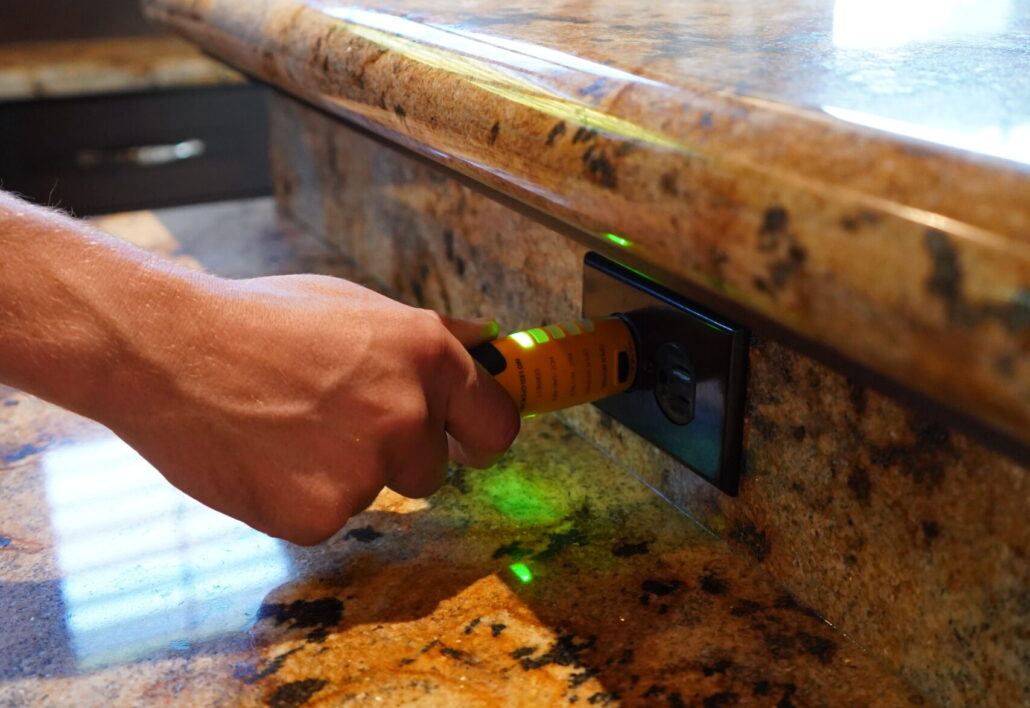
A GFCI outlet, or a Ground Fault Circuit Interrupter outlet, is a safety device that protects against electrical shock by monitoring the electrical current and quickly shutting off power if an imbalance occurs. GFCI protection is required in one of two forms: either at the outlet itself (generally you see these with little buttons on the outlet itself), or as a GFCI breaker which would be located in the electrical panel. GFCI protection is required anytime an outlet is within 6 feet of water (as in a kitchen or bathroom sink), outside, or in a garage. In homes built in 2020 or later, all outlets below ground level are also required to have GFCI protection.
Missing GFCI outlets are a common occurrence in homes and are generally easily remedied, but they are an important part of your homes electrical system. They are often the first defense for over-amplification which is when too much energy is flowing through a given outlet. Any licensed electrician would be able to place a GFCI outlet if one is needed but could also be done by anyone who is trained in wiring one correctly. That being said, if you are ever uncomfortable with any home project, please contact a professional for assistance.
Missing or Expired Smoke/Carbon Monoxide Detectors
Here in Minnesota, we are required to have a smoke detector in every bedroom. (Check out our blog post here for more information about smoke detector and carbon monoxide detector location rules!) We often find smoke and carbon monoxide detectors are either expired or missing altogether. Smoke and carbon monoxide detectors generally have a 7-10 year life expectancy and tend to turn a cream color as they age. Take a look at your home and if your smoke and carbon monoxide detectors are expired or missing, the new year is a perfect time to replace them. If they are present and not expired, then this is your reminder to test them to ensure they’re functioning properly.
Disconnected Exhaust Vents
Exhaust vents are a wonderful invention. They are in place to help direct moist air from the interior to the exterior of your home. What can happen is that the line that should connect the exhaust fan to the roof to vent out that moist air is often disconnected or improperly connected to the exterior portion of the vent. When this happens, moist, hot air is trapped within the attic space causing prime conditions for mold growth and moisture damage to the surrounding area.
Poor Grading
Grading refers to the ground surrounding a home and the direction in which it is sloped. When we inspect the grading around the home, we are looking for positive grading, which means sloping away from the home. Negative or neutral (think towards the home or flat) grading can lead to water pooling near the home or encourage water to enter the home through the foundation. Though water can be mitigated, it is best to have proper positive grading as a first line of defense. Optimally, the ground around your home should be 6” higher than 10 feed away from your home. This isn’t always possible, so using creative landscaping can help divert water away from your home.
Double Tapped Circuit Breakers
Every home has some sort of electrical panel present within the home. Most homes have an electrical panel that uses circuit breakers in lieu of fuses. We will talk about fuse panels on a different day. Today let’s chat quickly about double tapped circuit breakers. The majority of electrical panel companies do not allow for double tapping, or placing two wires to be placed into the same breaker. When a breaker is double tapped, there is a possibility for that breaker to be over heated and cause potential failure. Often we see double tapping because the panel is full and a new branch was added to the home. This is generally a repairable issue that a licensed electrician can repair.
Final Thoughts
Though there are numerous other defects I could discuss, these are the most common things we find on a regular basis. Many of these can be easily and quickly remedied which can prevent big issues, or, if you’re listing your house for sale, can prevent them from showing up on the Home Inspection Report. If you are unsure of the condition of your home, we would love to help. There is never a bad time to have your home inspected. Reach you if you have any questions about home inspections and see how we can help.